


The Impact of Climate Change on Agriculture
 BookMyCrop
Oct 10, 2022
Introduction:
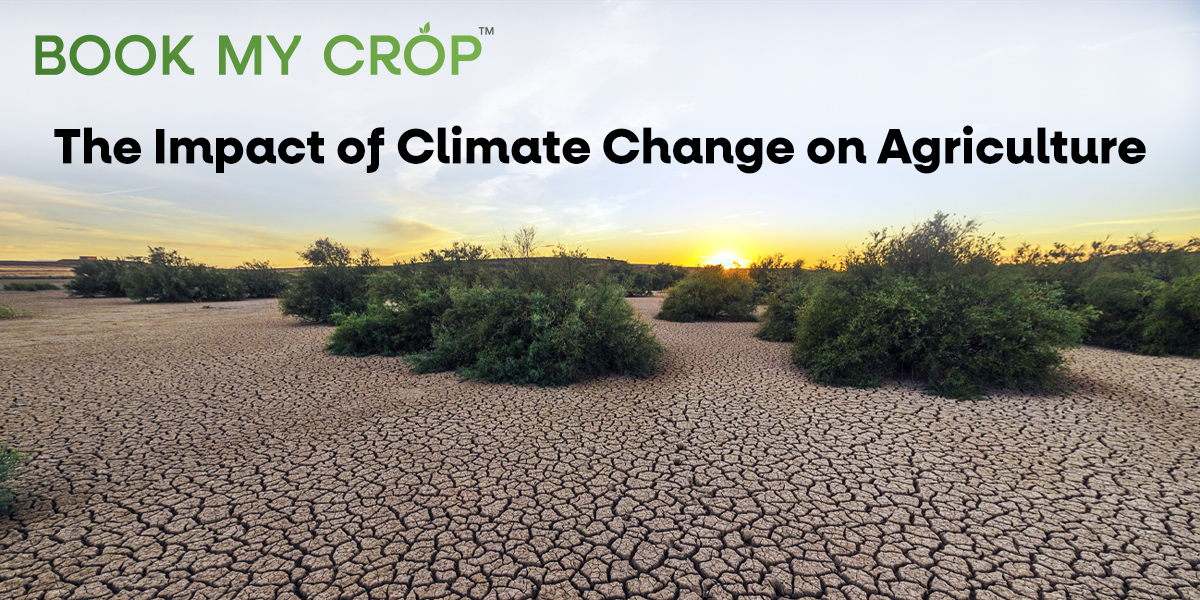
The earth's temperature is increasing as a result of the unchecked growth of greenhouse gas emissions. Because of glaciers melting, more frequent extreme weather events, and other factors, the seasons are changing. The speeding up of climate change, the increase in world population, and economic expansion all pose threats to food security. Because of climate change, agriculture is in significant danger. On the whole, rising temperatures encourage the growth of weeds and pests while decreasing the agricultural yields of targeted crops.
The probability of both short-term crop failures and long-term production decreases increases with changes in precipitation patterns. Even while some crops will benefit in certain parts of the world, the overall effects of climate change on agriculture are anticipated to be negative, endangering the security of the world's food supply. Those in underdeveloped countries who are already vulnerable and experiencing food insecurity will probably suffer the most.
Climatic Changes
Future climate change is expected to increase the frequency of heat waves, which will make agriculture increasingly difficult. Heat waves can cause both plants and animals to experience heat stress, which is detrimental to the amount of food that is produced. When the plants are in the blossoming stage, which is a single, crucial moment, extreme heat waves can result in no seeds at all, which is detrimental to agricultural productivity. Heat stress can cause animals to lose their fertility and productivity. Additionally, it can harm their immune systems and make them more susceptible to infections in general.
Along with temperature increases and heat waves, significant changes in rainfall patterns are also anticipated as part of the projected changes in climate. Future droughts are expected to occur more regularly in some areas, while other areas are expected to see more intense downpours and flooding. As a result of rising sea levels, coastal areas may completely lose their agricultural land. Warmer climates could lead to an increase in disease and insect problems, as well as changes in the geographic distribution of some pests. Insects that operate as disease-transmission vectors, for instance, are predicted to travel more polarly in the future, although sheep have not yet been exposed to these diseases.
How is agriculture being impacted by climate change?
The effects of climate change on agriculture could take many different forms.
Above a certain temperature range, warming tends to reduce yields because crops mature more quickly and produce less grain as a result. Additionally, plants' ability to absorb and use rainwater is hampered by rising temperatures. Plants lose more moisture from their leaves through transpiration when temperatures rise, quickening soil evaporation.
Evapotranspiration is the term used to describe the end result. Due to the expectation that global warming would result in more rainfall, the overall impact of rising temperatures on water availability will be a race between increased evapotranspiration and increased precipitation. Usually, the competition is won by the higher evapotranspiration.
Impacts on crops:
- Crop productivity may be affected by higher CO2 levels. Some laboratory research suggests that increasing CO2 levels may promote plant growth. But other factors like ozone, water, nutrient scarcity, and temperature fluctuations might prevent these potential yield improvements. For instance, if a crop is subjected to temperatures outside of their typical range or if enough water and nutrients are not available, yield increases may be reduced or stopped. Lower protein and nitrogen levels in alfalfa and soybean plants have been associated with elevated CO2, which results in a loss in quality.
- More severe temperatures and precipitation may hinder crop growth. Extreme weather, especially droughts and floods, can harm crops and reduce yields.
- In locations where drier soils are caused by warmer summer temperatures, managing drought may be challenging. In certain places, increasing irrigation would be feasible, but in other places, water resources might be constrained, leaving less water available for irrigation when more is needed.
- Even though more CO2 can encourage plant growth, it also reduces the nutritional value of most food crops. Due to increased atmospheric carbon dioxide levels, the majority of plant species, including wheat, soybeans, and rice, have reduced protein and essential mineral concentrations. Health risks may result from the direct effects of increased CO2 levels on agricultural nutrition. An additional issue with increased pesticide use is that it puts human health at risk due to rising insect pressures and deteriorating pesticide function.
The effects on livestock:
- As a result of climate change, heat waves are predicted to occur more frequently and could pose a major threat to cattle. A drought might jeopardize pasture and feed supplies. Drought reduces the amount of high-quality feed that is available to grazing livestock. A longer and more severe drought may occur in some areas due to hotter summers and less precipitation. Drought-related changes in agricultural output may also have an impact on animals that rely on grains.
- Climate change may increase the frequency of diseases and parasites that affect animals. Some parasites and diseases may find it easier to survive due to warmer winters and an earlier spring. Increased precipitation might promote the development of diseases that need moisture.
- Potential changes in veterinary practises, such as an increase in the use of parasiticides and other therapies for animal health, are anticipated to be implemented to preserve livestock health in response to shifts in pests, parasites, and microbes brought on by climate change. By increasing the possibility that pesticides will reach the food chain or promoting the evolution of pesticide resistance, this may have an effect on the safety, distribution, and consumption of livestock and aquaculture products.
Fisheries-Related Effects
- Two of the many difficulties that many fisheries already face are overfishing and water pollution. Climate change may cause these strains to become more severe. Particularly, temperature variations might have a significant impact.
 Share


Latest Blogs
Agriculture has always been the backbone of India’s economy, su ...
26-Aug-2025
Nowadays, technology has become the backbone of modern farming.
21-Aug-2025
The agricultural sector has always been the backbone of India’s ...
21-Aug-2025
The agriculture sector in India has been the backbone of the na ...
21-Aug-2025
The agricultural landscape in India is undergoing a transformat ...
31-Jul-2025


